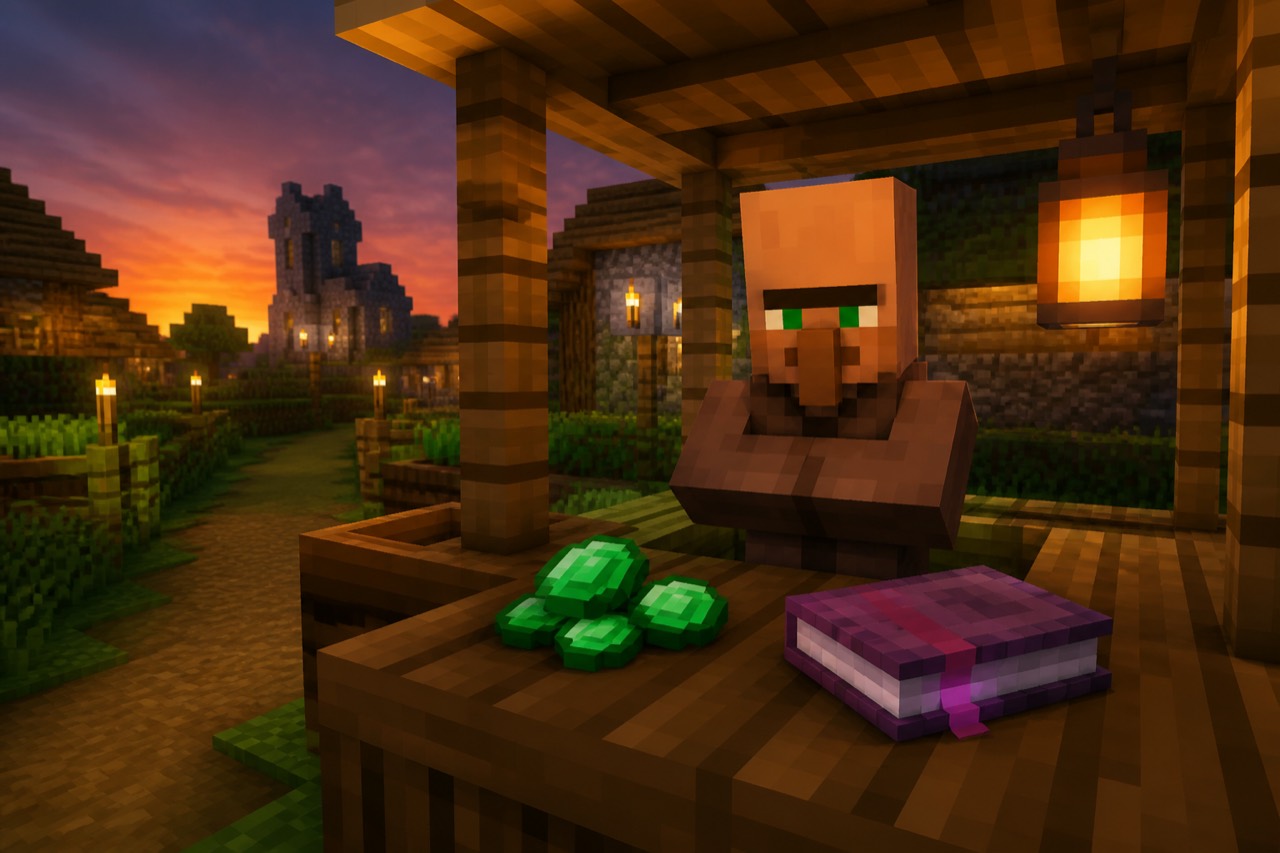

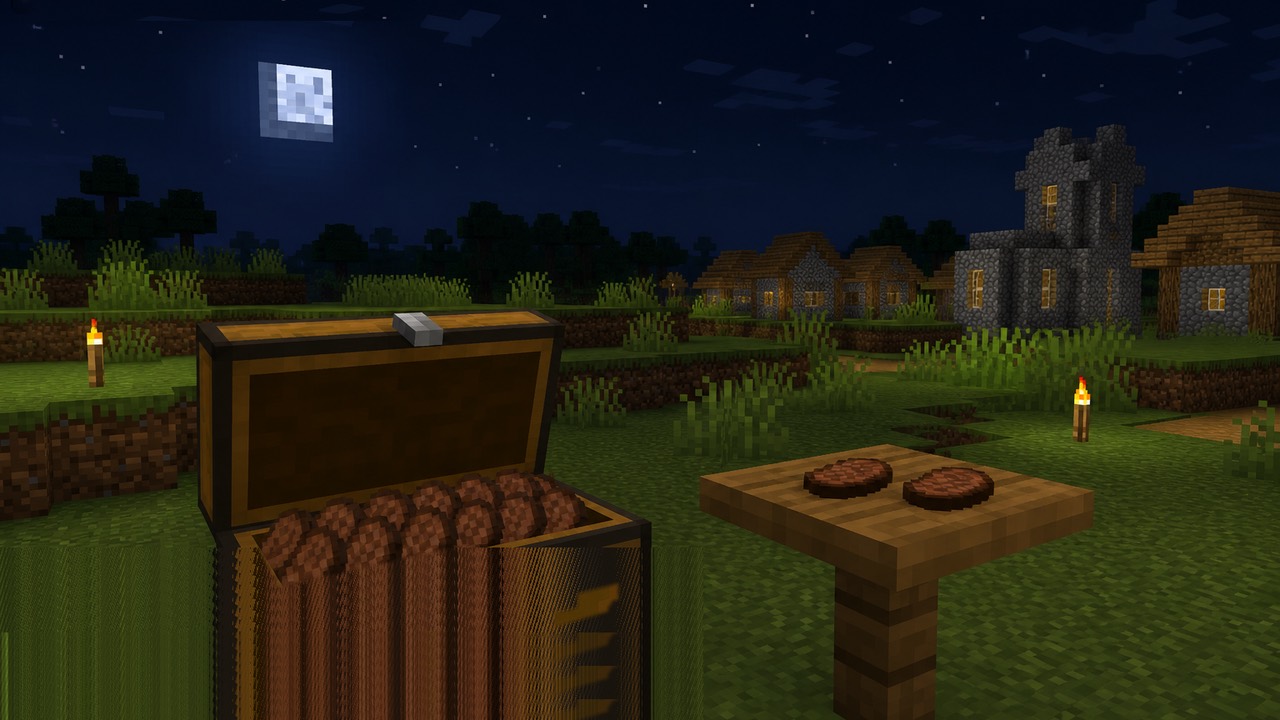
Busy day exploring
~364
About two steaks to fill the hunger bar. In the kitchen that’s only about 364 calories, roughly one-sixth of a typical adult day.
Golden-carrot day
~51
Same busy day on golden carrots. I only count the real carrot, not the gold.
A what-if grocery list. I only count the food that replaces what a Survival day burns off the hunger bar. Not a meal plan or medical advice.
Minecraft can keep you sprinting, mining, and fighting on a food budget that would not look like a full human day of meals.
Related: How wrong is Minecraft about food? asks whether a drumstick matches real kitchen energy. Here I ask how much food the hunger bar actually demands.
That’s enough for Minecraft. It is not a real dinner.
You finish a long sprint, pull steak from the hotbar, and watch the hunger bar climb. In Minecraft that feels like dinner.
I’m using about 2,257 calories as a stand-in for a typical adult day of food. So Minecraft is letting this Explorer run, mine, and fight through an entire day on roughly one-sixth of that.
And steak isn’t even the strangest result. Do the same busy day on golden carrots, Minecraft’s prized sprint food, and the real-world total lands around 51 calories. I count the carrot. I ignore the gold.
So I wanted to know: how little food could Minecraft actually let you survive on if you only ate when the hunger bar asked? I built five different Survival days to find out, then counted what 100 of those days would look like in a grocery bag.
Minecraft barely makes you eat
The first thing I noticed is that Minecraft doesn’t really care how long your day lasts. It cares about what you do during it.
Walking around isn’t the same as sprinting. Fighting isn’t the same as farming. Healing can cost hunger. Mining and movement add their own costs.
So I wrote five example days. These are recipes I published, not a log of someone’s YouTube world.
The Farmer has an easy day: light digging, short sprints, no combat. The Miner works underground. The Explorer sprints 1,500 blocks and gets into some fights. The cave-and-raid player has a combat-heavy day. The endgame player does the Explorer’s exact same work, but eats golden carrots instead of steak.
Then I asked one question: how much food would each player need if they ate only enough to replace the hunger they used?
The answer was very little.
| Survival day | Real-world food | Calories |
|---|---|---|
| Farmer | A few bites of bread, carrot, and potato | 14 |
| Golden-carrot Explorer | About 2 medium carrots (gold ignored) | 51 |
| Miner | Less than 1 steak plus some bread | 95 |
| Explorer | About 2 kitchen steaks | 364 |
| Cave / raid | About 2 kitchen steaks | 366 |
A “steak” here is an 85 g cooked sirloin stand-in, not a restaurant plate the size of a cow.
Even the hungriest player here doesn’t reach 400 calories. That’s less than one-fifth of the typical adult day I’m using (about 2,257 calories).
The Farmer lands at 14 calories. That’s not a typo.
The Explorer needs about 26 times the Farmer’s calories and still only gets 364. A more active Minecraft day does demand more food. It just doesn’t demand anything that looks like a human diet.
Daily kitchen calories vs a real adult day
Every bar sits far under the dashed lines. A typical adult day for Steve is about 2,257 calories. For Alex it’s about 1,763. Those are light-activity adult budgets, not measured players.
| Example day | Calories |
|---|---|
| Miner | 95 |
| Explorer | 364 |
| Farmer | 14 |
| Cave/raid | 366 |
| Golden-carrot endgame | 51 |
Golden carrots make it even weirder
In-game, golden carrots are elite sprint fuel. They fill the hunger bar well, so you need fewer bites to cover the same work.
In the kitchen I only count a carrot. So the same Explorer day that costs about 364 calories in steak costs about 51 calories in golden carrots.
That’s the same gap as how wrong Minecraft is about food, stretched across a whole Survival day. The bar feels excellent. The grocery bag almost disappears.
Keep the Explorer’s work the same and swap only the food:
| Food | About how much | Calories |
|---|---|---|
| Steak | ~2.0 steaks | 364 |
| Bread | ~3.8 slices | 295 |
| Golden carrot | ~2.1 carrots | 51 |
Foods that fill the bar well need fewer bites. Carrots have less real kitchen energy per bite, so the same busy day becomes the lightest grocery day.
Why does Minecraft need so little food?
Minecraft does not bill you much for being alive. It bills the things you do.
Behind the hunger bar is a hidden exhaustion meter. Sprinting, mining, jumping, attacking, and healing add to it. When that meter fills enough, the hunger bar drops, and you eat to put it back.
Standing around barely costs anything. A quiet farm day barely costs anything. A long sprint-and-fight day costs more, which is why the Explorer and the cave-and-raid player land near two steaks instead of a nibble.
Two steaks still only translate to about 364 kitchen calories under the portions I used. The hunger bar is a survival meter, not a kitchen.
What 100 days of that food looks like
One Minecraft day of refills is one human day of kitchen food in this what-if. Multiply the Explorer’s day by 100 and the grocery pile finally gets a size you can picture.
| 100 explorer days | Amount |
|---|---|
| Minecraft grocery bag | ~202 steaks |
| Kitchen calories those steaks represent | ~36,400 |
| Steve’s 100-day comparison | ~225,700 |
Minecraft supplies only about 16% as much food energy. That’s the same one-sixth story, stretched until you can see the missing meals.
The Farmer’s 100-day bag is almost a joke: about 6 slices of bread, 7 carrots, and 4 potatoes. The golden-carrot run is about 206 carrots and still only about 5,100 calories across the whole stretch.
| Survival day | 100-day grocery bag | Calories / day |
|---|---|---|
| Farmer | ~6 slices · ~7 carrots · ~4 potatoes | 14 |
| Golden-carrot Explorer | ~206 carrots | 51 |
| Miner | ~39 steaks + ~32 slices of bread | 95 |
| Explorer | ~202 steaks | 364 |
| Cave / raid | ~203 steaks | 366 |
Does a heavier steak change the story?
A skeptic could say my steaks are too small. So I checked the result another way: what if every Minecraft food item were a blunt 100 g slab of its real-food stand-in? That’s the fairness weight from How wrong is Minecraft about food?
Explorer steak jumps from about 364 to about 428 calories a day. It is still a tiny fraction of Steve’s 2,257. Farmer and golden-carrot days stay tiny. The direction of the story does not flip.
Ordinary kitchen portions vs 100 g items
Same Survival days. Only the kitchen weight per item changes. The taller bars are still nowhere near a normal adult day of food.
| Example day | Ordinary portions |
|---|---|
| Miner | 95 |
| Explorer | 364 |
| Farmer | 14 |
| Cave/raid | 366 |
| Golden-carrot endgame | 51 |
What if a real body lived on that Explorer food?
The Explorer grocery day is only about 364 kitchen calories. A typical adult day for Steve’s stand-in is about 2,257. On day one, that leaves a hole of about 1,890 calories.
Some people use a simple rule: “3,500 calories equals one pound.” That rule draws a straight line down to zero pounds. Real bodies do not work that way. As you get lighter, you burn less food each day, so the hole gets smaller.
I wanted a fairer estimate. So I used a step-by-step energy model in the same spirit as the NIH Body Weight Planner research. Each day, the resting burn updates with current weight. Fat and muscle both shrink. Over about two weeks, the body also dials down how much energy it spends.
Steve’s stand-in starts at about 152 lb (healthy weight for his height, age 30). Every day he only eats the Explorer steak refill. I stop the story when his height-and-weight score (BMI) falls under 15. Past that, I will not treat the estimate as a finding.
| Day | About how heavy | BMI |
|---|---|---|
| 0 | ~152 lb | 22.5 |
| 14 | ~144 lb | 21.3 |
| 45 | ~126 lb | 18.6 |
| 60 | ~117 lb | 17.3 |
| 84 | ~101 lb | under 15 |
By day 84 he has lost about 51 lb. That is already a dangerously low weight band. It is not “zero pounds,” and it is not a day-of-death timer. Bones and the tissue you need to live are still there. The model stops on purpose.
If I forced the old 3,500 rule anyway, it would invent about half a pound lost every day, forever, and a cartoon zero around day 282. I show that only to throw it out.
Minecraft goes the other way. Steve can stand still for years with a full hunger bar, because the game almost never charges you just for existing. A real body still burns most of its day staying alive, even if you never sprint a block.
Explorer food on Steve’s stand-in
Weight drops fast at first, then slower as daily burn falls. The line ends when BMI drops under 15 (about day 84).
| Day | Pounds |
|---|---|
| 0 | 152.3 |
| 14 | 143.9 |
| 45 | 125.9 |
| 60 | 116.8 |
| 84 | 101.2 |
Minecraft can let you sprint 1,500 blocks, fight mobs, and mine for a day, then fill the hunger bar with about two steaks. In the kitchen that’s only about 364 calories. Golden carrots make the same day about 51 calories. Do that 100 times and the grocery bag stays small next to a normal adult diet. Put the Explorer day on Steve’s stand-in and he is already around 101 lb by day 84. The game character can stand still forever without a stay-alive food bill.
How I calculated it
I treat one Minecraft day of hunger refills as one human day of kitchen food. I only count food that replaces what that day’s actions burned. No extra snacks.
Minecraft bills movement and work with a hidden exhaustion meter. Every 4 exhaustion burns 1 hunger point on the bar. I count each food by hunger plus saturation, and I assume you use the food fully. Live top-offs depend on how full your bar already is.
Example-day work (locked): Miner 11.6 hunger-plus-saturation units (800 blocks, short sprints, light fight/heal, 70% steak / 30% bread). Explorer 42.0 (1.5 km sprint, travel combat, some blocks, steak only). Farmer 1.6 (light dig, short sprints, no combat, bread / carrot / potato mix). Cave / raid 42.3 (sprint plus heavy fight/heal, steak only). Golden-carrot endgame 42.0 (same load as Explorer, golden carrot only).
Kitchen portions: steak 85 g cooked; carrot / golden carrot 61 g (carrot calories only); bread 29 g (about one slice); baked potato 173 g. Second check: every item as 100 g of the same stand-in.
Steve / Alex comparison: official U.S. mean heights, healthy BMI 22.5 start, age 30. Light-activity daily calories about 2,257 / 1,763 (Mifflin–St Jeor resting energy × 1.375). Not measured players. Steve start mass about 69.1 kg (~152 lb).
Weight model (Explorer steak only × Steve): Daily loop updates Mifflin resting burn from current mass × 1.375. Fat vs lean split follows Forbes-style partitioning (C ≈ 10.4 kg). Adaptive thermogenesis uses Hall-style coefficients (β ≈ 0.14, time scale ≈ 14 days) plus a thermic-effect term on the intake change. Starting fat mass uses a Deurenberg body-fat estimate at BMI 22.5. Published series stops on the first day modeled BMI falls under 15 (day 84 → ~101 lb). Static 3,500 kcal/lb → ~0.54 lb/day and a cartoon zero around day 282; refused as a prediction.
Exhaustion rates and food values follow the Minecraft Wiki Food tables (re-verify before any remaster). USDA SR Legacy kcal/100 g and food IDs: steak 169457, carrot 170393, bread 174924, baked potato 170093, cookie 172716.
Change the day’s work and the diet changes with it. Real players snack, stand still, eat cake, and eat for fun. That breaks the “refills only” rule. The weight line is one locked path (Explorer steak × Steve stand-in) until BMI falls under 15. It is not your body, not a medical forecast, and not a day someone “turns into a skeleton.” Kitchen weights are for the energy math, not Mojang pack weights.
See also
Sources & notes
Game rules
- Minecraft Wiki. Food (exhaustion, hunger, saturation): minecraft.wiki/w/Food
Kitchen energy & portions
- USDA FoodData Central SR Legacy (energy nutrient 208; food IDs named in How I calculated it).
Human energy comparison
- Official U.S. data. CDC / NCHS adult mean heights (FastStats body measurements).
- Mifflin–St Jeor resting energy × 1.375 light activity (stated comparison; not measured players).
- NIH notes the traditional static “3,500 kcal = 1 lb” rule is inadequate for weight simulation (research behind the Body Weight Planner).
- Hall KD et al., Lancet (2011), quantification of energy imbalance on body weight (dynamic model family used by the NIH planner). Adaptive-thermogenesis coefficients and Forbes partitioning parameters as summarized in that literature; not a clinical forecast for a real person.
- Deurenberg adult body-fat estimate used only to set starting fat vs lean mass for the dynamic run.